
Benjamin Gray & (François) Justin Vulliamy 1712 – 1797
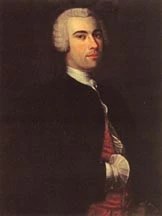
Justin was born in Switzerland, moved to London around 1730, where he was apprentice of Benjamin Gray who was appointed watchmaker in ordinary to George II in 1742. He might also have had connections to the workshop of George Graham as he came to London from Paris to learn more about Graham’s cylinder escapement. Justin married Gray’s daughter Mary, and went into partnership with him (from around 1743), signing their work with both names. They worked at London’s 68 Pall Mall. They were among the first London watchmakers to take up George Grahams cylinder escapement. After Benjamin Gray’s death in 1764, Justin Vulliamy took over Gray’s business and signed his work ‘Justin Vuillamy’ until it was taken over by one of Justin’s sons: Benjamin Vulliamy.
The Gray/Vulliamy letter code:
From the beginning they used a particular letter code to number their movements which Benjamin Gray introduced already when he was working on his own. Usually letter codes are easily transferrable into a sequential number code by use of a logical key. This is not possible for the Gray/Vulliamy lettering code, so only one small part of it has been understood to date. They started with a three letter code switching to a four letter code around 1812.
A part of the puzzling letter code, the flair for letter -and word games is underlined by the use of alternate signatures for their suboptimal work during the production of Benjamin Vulliamy, these signatures are: ‘Fras Risdon’, a combination of Fra(nçoi)s, Benjamin’s father’s never used Swiss first name and ‘Risdon’, the maiden name of Benjamin Gray’s wife Maria Risdon, Benjamins’ Grandmother. The other alternate signature is ‘J Gray’ obviously combining the first name of Benjamin’s father ‘J(ustin)’ and his grandfather’s last name ‘Gray’.The use of these names shows a great devotion to and pride of the origins of the Vulliamy watchmaking dynasty. Most probably for the decryption of the letter code this needs to be taken into account.
They used their letter code well into the 19th century, but then also used number codes, which might also not be sequential (A). Most numbers are used for work of lower quality.

Benjamin Vulliamy (1747 – 1811)
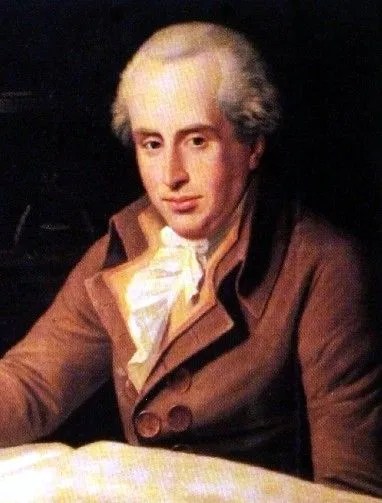
From an early age, Benjamin had shown interest in pursuing his father’s career. As an adult, he began to earn a reputation as a builder of mantel clocks, decorative timepieces that adorned the halls of high society (nowadays, some can be found at the Derby Museum and Art Gallery). His talent earned him a Royal appointment in 1773, through which he came to receive an endowment of £150 a year as George III’s King’s Clockmaker (there was a similar distinction, Royal Watchmaker, then held by George Lindsay). The king, an enthusiast for watches and mechanical devices, was patron of Justin Vulliamy, but only Benjamin received this significant honour.
Around 1780 Benjamin entered the society ‘Vulliamy & Son’. In December 1790 Benjamin Vulliamy bought a part of Larcum Kendalls stock which was auctioned off after his death. Father and son Vulliamy worked together until the death of Justin, on 1.12.1797. They signed their work just ‘Vulliamy’. Around 1780, Vulliamy was commissioned to build the Regulator Clock, the main timekeeper of the King’s Observatory Kew , which served as Prime Meridian and was responsible for the official London time until 1884, when the Greenwich Royal Observatory assumed both roles. Benjamin Lewis Vulliamy took over the business in 1801.
 Antiquarian Horology