
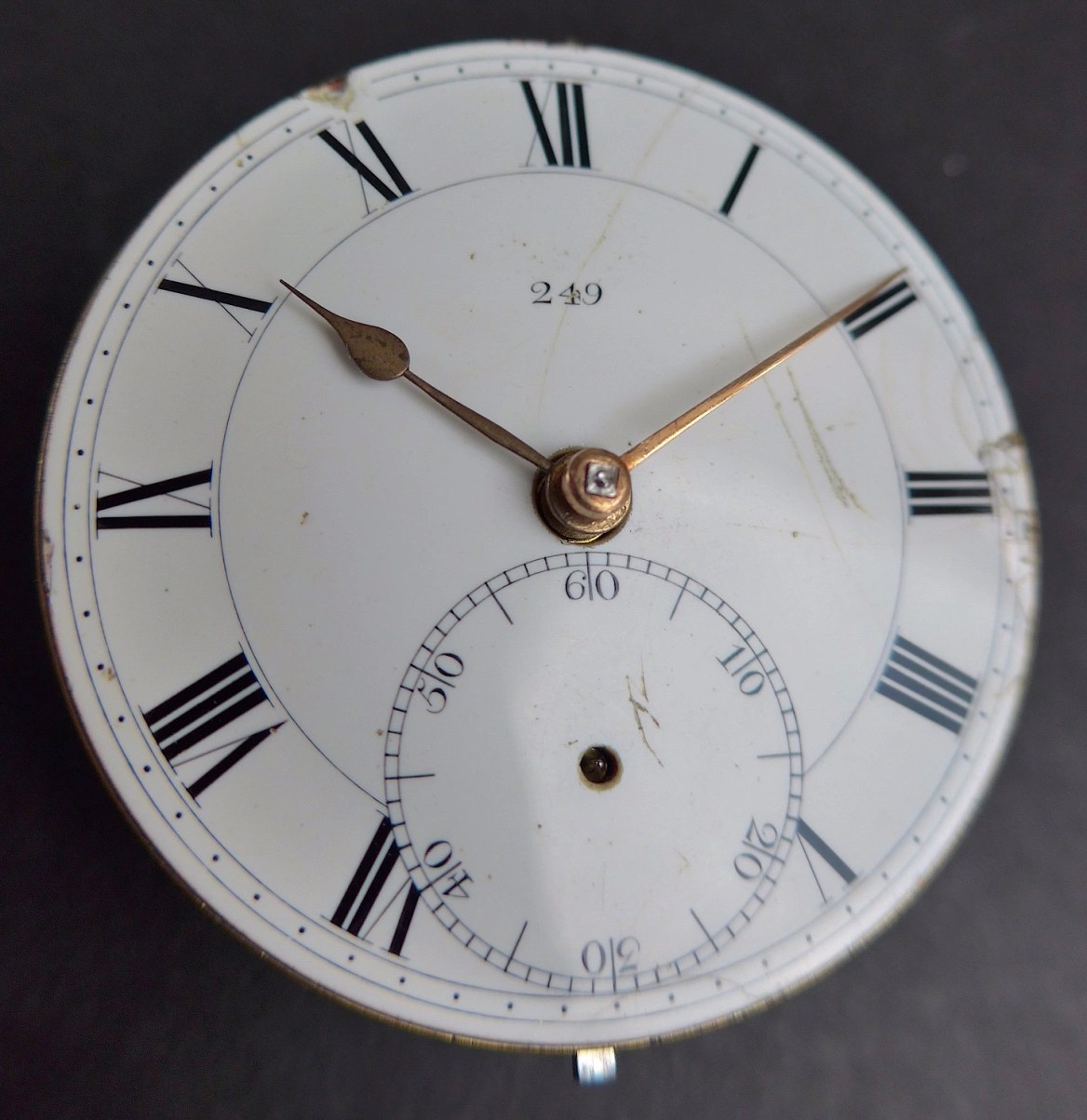

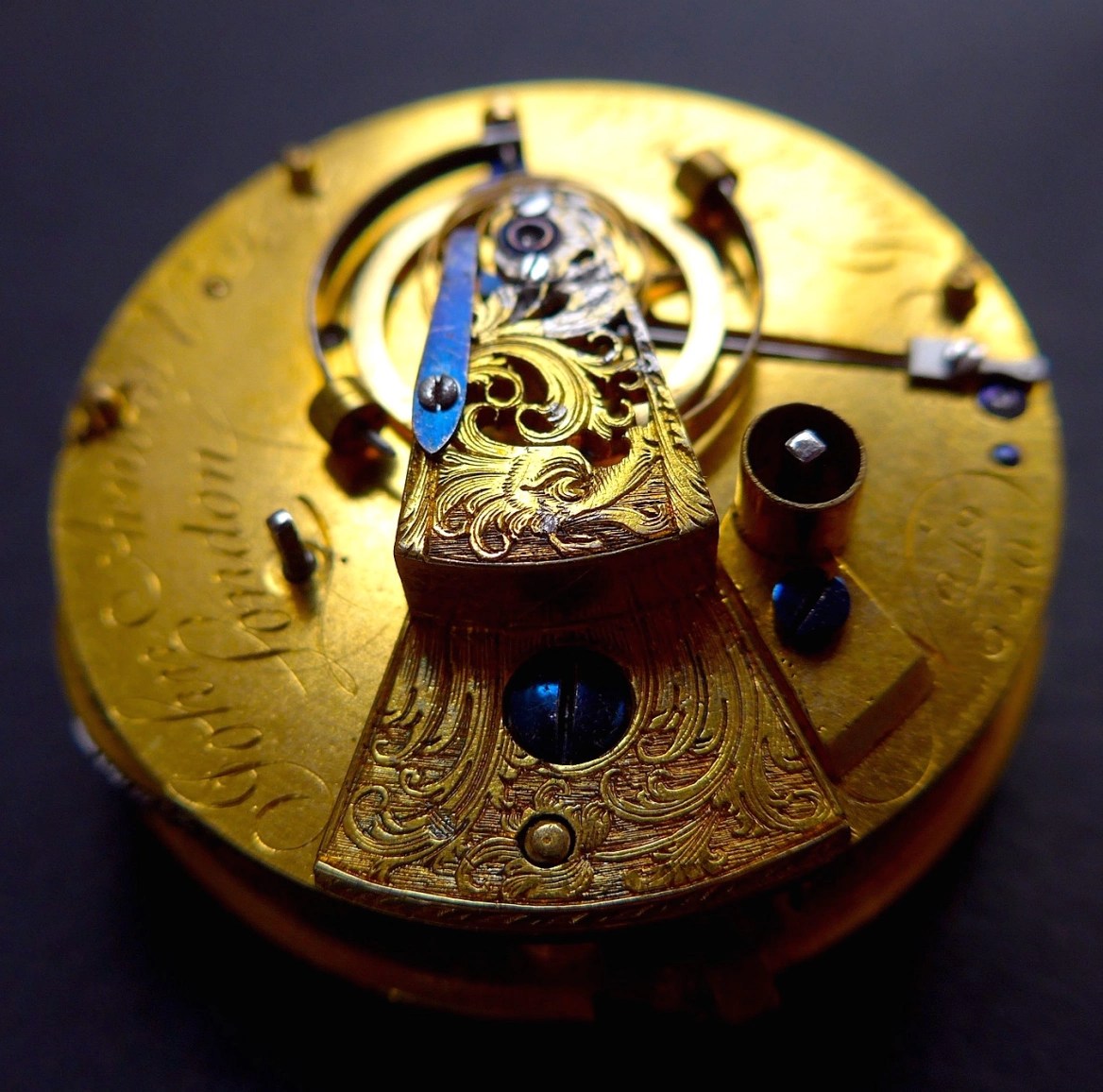
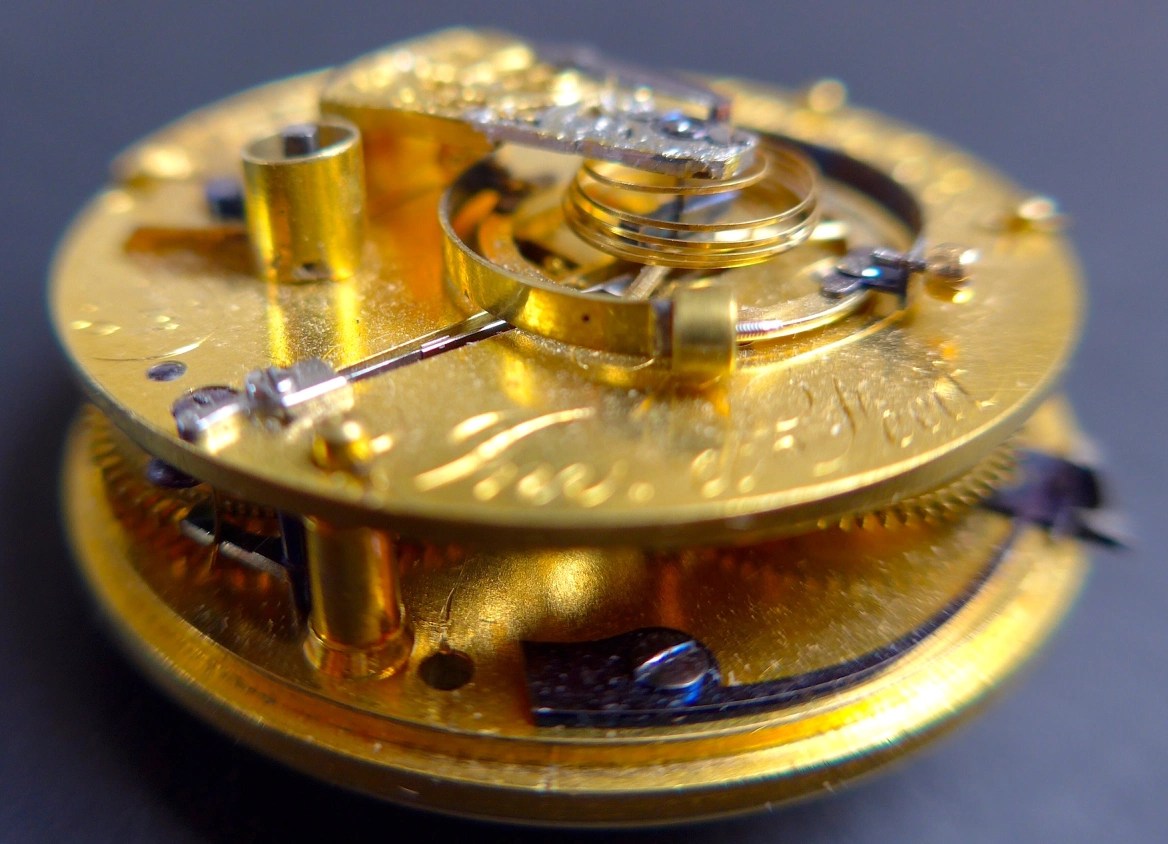
Description: Gilt brass, full plate fusee movement (43 mm diameter) pierced, engraved and unfortunately repaired cock. Jewelled (diamond) balance and escape. Arnold-type spring detent escapement, detent in a slot, the necked foot typical of the period. Arnold’s bimetallic balance (OZ type) screwed to a plain gold balance. Original 4-turn gold helical spring with Arnold’s terminal curves. Original enamel dial with the chronometer number hand written on the counter enamel, later gold hands. (A)
Additional Info:

The gold helical spring has been introduced by Arnold to counteract problems with the steel versions, which oxidised easily at sea because of the damp conditions and were subject to magnetic influence. He also introduced the gold balance in 1791 for the same reasons.
Engraved on the backplate ‘John Arnold & Son, Inv(eni)t et Fecit, No. 249/550’. The numbering reveals the movement belonging to the ‘second kind’ (301 – series) of pocket chronometers.
John Roger Arnold spent two years (1792 – 1793) as apprentice of Abraham – Louis Breguet in Paris. The movement dates from the year when John Roger returned from Paris. The style of his French master can be seen in the shape and finishing of the foot of the dust pipe around the winding square.
 Antiquarian Horology